
March Rate Watch: How Florida Utility "Summer Tiers" Work and How to Avoid the Price Jump
As March brings warmer temperatures to Florida, homeowners are bracing for more than just the humidity. In the world of Florida utilities, March often marks the transition toward "summer tiers"—a pricing structure that can catch EV owners off guard if they aren't prepared.
While Duke Energy Florida is actually lowering rates this month by roughly $44 per 1,000 kWh due to the removal of storm recovery charges (Duke Energy, 2026), other providers like FPL are seeing slight base-rate increases (FPL, 2025). Here is how to navigate the seasonal shift.
Understanding the 1,000 kWh Benchmark
In Florida, 1,000 kWh is the "standard" used to measure a typical home's energy cost. However, most Florida homes—especially those charging an EV—regularly exceed this. According to EnergySage (2026), the average Florida resident uses about 1,080 kWh per month, which is well above the national average.
For many local utilities, crossing this 1,000 kWh line triggers a higher "Tier 2" rate. For example, JEA customers pay a base energy charge for the first 1,000 kWh, but every unit after that is billed at a significantly higher rate (JEA, 2026). When your AC and your EV charger are both pulling from the grid, you can find yourself paying a "premium" for your fuel without even realizing it.
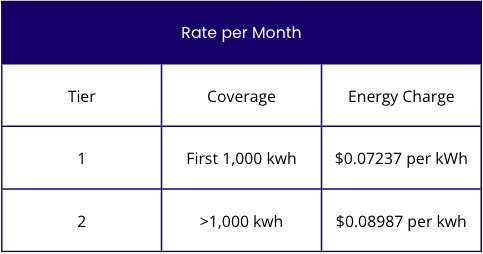
JEA's tiered utility pricing where high usage triggers more expensive electricity rates
New in 2026: Demand Charges & "Shift and Save"
Florida utilities are moving away from simple tiers and toward modernized pricing to manage the state's growing energy demand. Both OUC and FPL have major updates launching this year to help EV drivers save—if they know how to use them.
The OUC PeakSHIFT Program
The DemandLevel component (Effective March 2026): OUC is introducing a tiered, fixed distribution charge based on your home's monthly peak grid use. This is designed to better align grid costs with actual usage (OUC, 2026).
FPL EVolution Home: The "Flexible" Shift
FPL is also evolving its popular home charging program to give drivers more control over their bills:
The Flexible Program (Launching Summer 2026): This new option moves away from a flat unlimited fee. Instead, it offers a lower fixed monthly charge (around $27–$36) combined with Time-of-Use (TOU) energy charges.
Off-Peak Advantage: Under this plan, charging during off-peak hours (nights, weekends, and holidays) will cost as little as $0.02 per kWh—a fraction of the standard residential rate (FPL, 2026).
Duke Energy: Credits & TOU Options
Off-Peak Charging Credit: Duke offers a $7.50 monthly bill credit for residential customers who agree to charge their EV with a Level 2 charger during off-peak hours (11 PM to 5 AM). You remain eligible for the credit even if you have to charge during peak hours twice per month (Duke Energy, 2026).
Whole-Home TOU: For those who can shift more than just their car, Duke’s residential Time-of-Use rate offers "Discount Hours" from midnight to 6 AM (March–November) where rates drop to roughly $0.035 per kWh (Duke Energy, 2026).
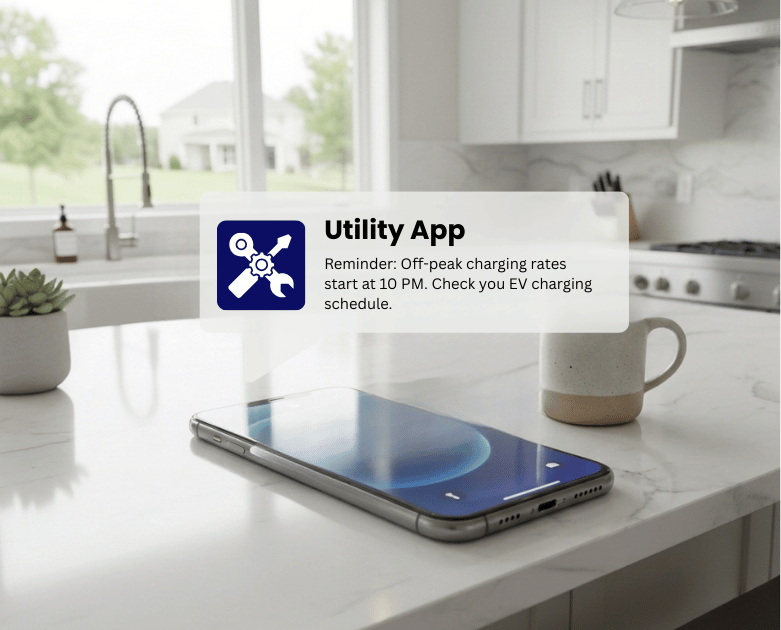
Using utility mobile apps to schedule EV charging during cheaper off-peak hours
Strategies to Beat the Price Jump
The 2:00 AM Rule: Use your Level 2 charger’s scheduling feature. Even if your utility doesn't have a TOU plan yet, charging at night reduces the "demand" on your home’s electrical panel while the AC is cycling.
Monitor Your "Tier Status": Check your utility's digital dashboard weekly. If you see you’re approaching the 1,000 kWh mark early in the month, try to minimize other heavy appliance use.
Audit Your AC: Since the AC consumes the "cheap" Tier 1 power first, a dirty filter or aging unit can push your EV charging into the expensive Tier 2 bracket.
Take Control of Your Energy Bill
March is the time to audit your energy habits before the Florida summer truly arrives. Whether you’re looking to switch to a TOU plan or need a smart charger that automates your savings, Chargepros is here to help.
👉 Upgrade to a Smart Level 2 Charger & Start Saving Today
Sources
Duke Energy. (2026, Jan 14). Duke Energy Florida announces storm cost recovery charge removal. https://investors.duke-energy.com/news/news-details/2026/Duke-Energy-Florida-announces-storm-cost-recovery-charge-will-be-removed-from-customers-bills-a-month-early/default.aspx
FPL. (2025, Nov 20). Florida regulators approve FPL rate agreement. https://newsroom.fpl.com/2025-11-20-Florida-regulators-approve-FPL-rate-agreement-that-keeps-customer-bills-low,-meets-needs-of-growing-state
EnergySage. (2026, Jan 30). Compare Florida Electricity Rates. https://sunvena.com/electricity-cost-florida/
JEA. (2026). Electric Tariff Documentation - Residential Service. https://www.jea.com/My_Account/Rates/Electric_Tariff/
OUC. (2026, Feb 22). OUC Board Approves New Pricing Program (PeakSHIFT). https://oucblog.com/ouc-board-of-commissioners-approves-new-pricing-program/
Duke Energy. (2025, November 13). Duke Energy Florida announces significantly lower bills in 2026; residential customers using 1,000 kWh to see approximately $44 decrease beginning in March. Duke Energy News Center. https://news.duke-energy.com/releases/duke-energy-florida-announces-significantly-lower-bills-in-2026-residential-customers-using-1-000-kwh-to-see-approximately-44-decrease-beginning-in-march
FPL Source: Florida Power & Light. (n.d.). FPL EVolution Home. https://www.fpl.com/electric-vehicles/for-drivers/evolution-home.html
🔍 Information Disclaimer: This post contains information sourced from third-party experts. While we strive to share the most current data, EV technology and regulations evolve rapidly. This content is for general informational purposes and does not constitute a technical endorsement by Chargepros.
⚠️ Safety Notice: Electrical installations should only be performed by licensed and insured professionals. Improper installation can lead to fire hazards or void your vehicle's warranty. Chargepros is a licensed electrical contractor—let us handle the power so you can enjoy the drive.
