Beyond the Permit: Reading a "Final Inspection" Report Like a Pro
In our last post, we walked through the four critical steps of a professional installation. But for many Florida homeowners, the process ends with a piece of paper (or a digital PDF) from the city marked "Passed."
While seeing "Passed" is a relief, that final inspection report is more than just a green light—it’s a technical health certificate for your home. As we navigate the high-power demands of 2026, knowing how to spot the details in that report can help you ensure your system was built for long-term safety and maximum resale value.
The Anatomy of a "Passed" Report
When a municipal inspector (from cities like Miami, Orlando, or Tampa) visits your home, they are checking your installation against the National Electrical Code (NEC) 2026 standards. A professional report should specifically reference a few key items:
1. Continuous Load Verification
EV chargers are classified as "continuous loads," meaning they pull maximum power for hours at a time. The inspector verifies that your circuit and overcurrent protection (the breaker) are rated at 125% of the charger's output (Working RE, 2025).
Look for: Notes confirming a 60A breaker for a 48A charger, or a 50A breaker for a 40A charger.
2. Torque & Termination Specs
One of the most common causes of electrical failure in high-demand systems is a "loose" connection that heats up over time, eventually leading to thermal runaway or fire. To combat this, the National Electrical Code (NEC) mandates that all connections be tightened to the manufacturer's specific numeric value using a professional, calibrated tool.
As of 2026, Florida inspectors are strictly enforcing NEC Section 110.14(D), which requires installers to use a calibrated torque screwdriver or wrench to ensure terminations are safe (NFPA, 2023). Many local jurisdictions now even require contractors to provide a "Certificate of Calibration" for their tools during the inspection to prove the work meets these rigorous safety standards (Electrical License Renewal, 2023).
Look for: A mention in your report of "Torque settings verified" or "Terminations compliant with NEC 110.14(D)."
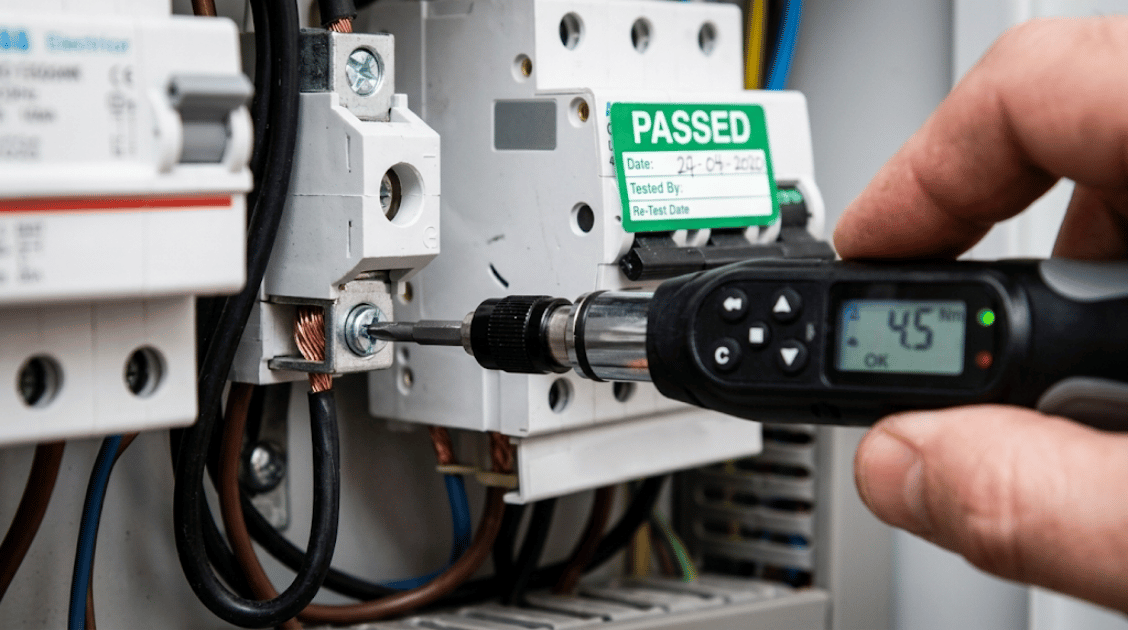
NEC 2026 compliant torque-tested electrical connections for EV charger final inspection (AI-generated)
Red Flags vs. Green Flags
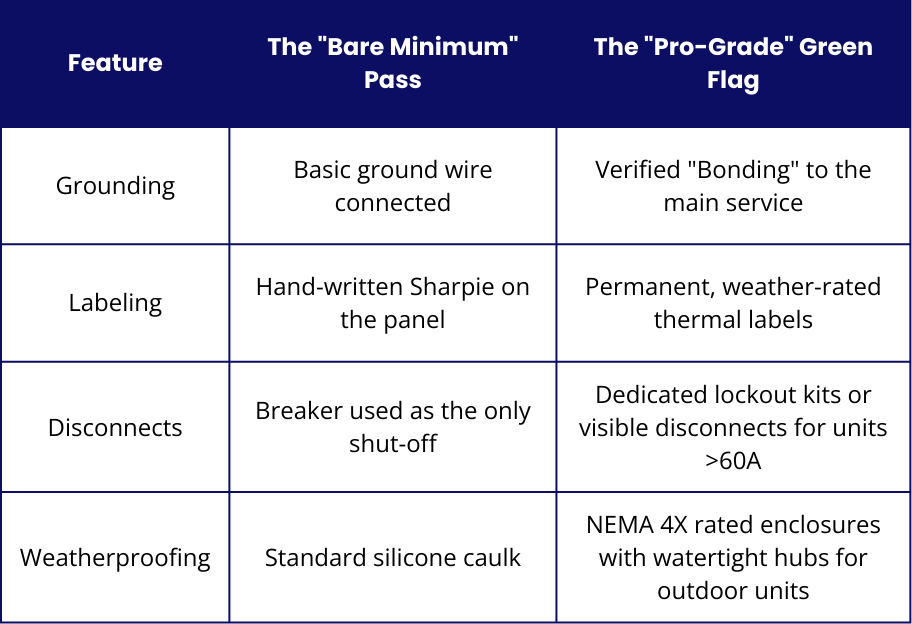
Not all "Passed" reports are created equal. Here is how to differentiate between a "bare minimum" pass and a "pro-grade" installation.
Why This Report is Your Best Friend for Resale
In the 2026 Florida real estate market, a home with a "permitted and finaled" EV charger is a premium asset. However, a "rebuilt" or "DIY" title on an electrical system can derail a sale during the buyer’s due diligence.
By keeping a copy of your Certificate of Acceptance (the formal name for a passed inspection), you provide:
Insurance Peace of Mind: Proof to your provider that the work wasn't a fire hazard (Feyree, 2025).
Appraisal Evidence: Documented proof of a permitted infrastructure upgrade that adds real property value (ESA, 2026).
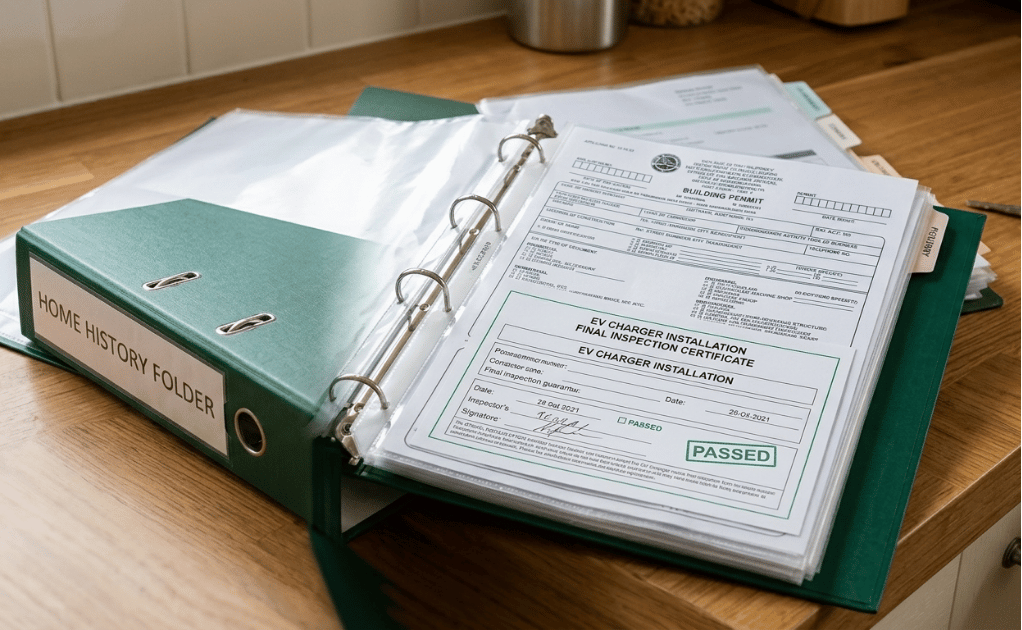
A homeowner's "Home History Folder" containing a neatly tucked away building permit and a Final Inspection certificate (AI-generated)
The Bottom Line
Don't just file your report away. Review it to ensure your contractor didn't just pass—but passed with flying colors. If you see terms like "NEC 625 compliant" or "Load Calculation verified," you can sleep soundly knowing your Florida home is ready for the future of transportation.
Optimize Your Documentation with Chargepros
At Chargepros, we don't just hand you a "Passed" sticker. We provide your load calculations and signed-off permits. We make sure you’re protected today and ready to sell tomorrow.
👉 Book Your Pro-Grade Installation with Chargepros
Sources
Working RE Magazine. (2025). Inspecting Electric Vehicle Charging Systems. https://www.workingre.com/inspecting-electric-vehicle-charging-systems/
National Fire Protection Association. (2023). NFPA 70: National Electrical Code (NEC), Section 110.14(D), Terminal Connection Torque.
Electrical License Renewal. (2023). NEC 110.14(D) Terminal Connection Torque. https://www.electricallicenserenewal.com/Electrical-Continuing-Education-Courses/NEC-Content.php?sectionID=797
SafetyCulture. (2026). EV Charger Testing Checklist: Inspect, Test, Record. https://safetyculture.com/library/energy-and-utilities/ev-charger-testing-checklist-d6mkiabtkwavtdvn
Feyree. (2025, December 15). Is a Permit Required to Install an EV Charger? https://www.feyree.com/blogs/news/home-ev-charger-permit-requirements
ESA (Electrical Safety Authority). (2026). Electric Vehicles & Charging Systems. https://esasafe.com/home-renovation-buying-and-selling/ev-charging-systems/
🔍 Information Disclaimer:This post contains information sourced from third-party experts. While we strive to share the most current data, EV technology and regulations evolve rapidly. This content is for general informational purposes and does not constitute a technical endorsement by Chargepros.
⚠️ Safety Notice:Electrical installations should only be performed by licensed and insured professionals. Improper installation can lead to fire hazards or void your vehicle's warranty. Chargepros is a licensed electrical contractor—let us handle the power so you can enjoy the drive.
